
🎬 The Story Behind|Akkeshi Distillery – Japan’s Little Islay
A New Voice, Born of Aspiration
In 2016, in the oyster-rich marshlands of eastern Hokkaido, a bold vision took root. From Tokyo’s food-import trading company Kenten Jitsugyo emerged a dream: to build a whisky distillery inspired by Scotland’s Islay—but distinctly Akkeshi in soul. This gamble on untested land—damp, fog-laced, and steeped in peat—was the first step toward crafting a Japanese whisky with its own wild voice
Scene 1: Building on Marshes and Dreams
The chosen site lay atop 50 m of soft, unstable soil. To anchor the distillery, engineers adopted the innovative “Columbus Method”: excavating and filling with Styrofoam before laying foundations. This literal reshaping of the earth echoed the distillery’s mission—to transform raw environment into refined spirit.
Scene 2: Scottish Roots, Hokkaido Heart
Forged in collaboration with Scotland’s Forsyths, two copper pot stills—cast in the “onion” style of Lagavulin—arrived in 2016. Forsyths engineers stayed onsite for months, guiding local staff through fermentation, distillation, and the art of peat-infused smoke .
Akkeshi’s essence is one of blend: imported Scottish barley now paired with local Hokkaido-grown malts like “Ryofu,” and water flowing from the peat-filtered Homakai and Oboro rivers.
Scene 3: Slowly Cultivating an ‘All-Hokkaido’ Spirit
From the start, Akkeshi was not content with imitation—it sought authenticity. In April 2020, they began harvesting local peat. They nurtured barley crops, dried Japanese Mizunara oak for barrels, and planned to build an aging warehouse by the sea to harness coastal maturing.
Their long-term dream: Akkeshi All-Star—a whisky rooted entirely in its own land, from grain to glass.
Scene 4: Environment as Author
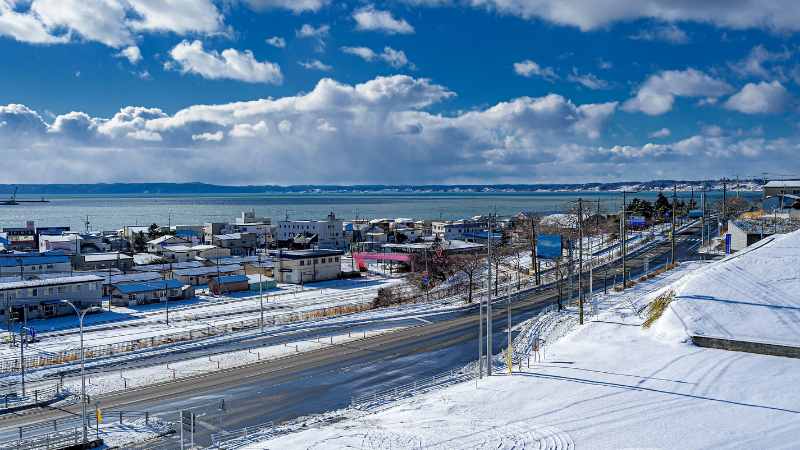
Akkeshi’s terroir is both subtle and dramatic: temperate summers brushed by sea fog, winters dipping well below freezing, and warehouses aged in salty air. The peat-filtered spring water gives the spirit a tea‑brown hue and a briny whisper—echoes of Scotland’s west coast, yet uniquely woven into Hokkaido’s fabric.
Final Scene: Recognition Begins
Their perseverance paid off. In 2020, the first single malt “SARORUNKAMUY” saw its light—the name echoing the Ainu gods and the land’s spirit. Soon, bottlings like “Kanro” and “Usui” earned top honors at the San Francisco World Spirits Competition and the World Whisky Awards.
🍂 When You Think of Akkeshi…
Picture a distillery standing on reclaimed marshes, its stills echoing Islay’s traditions—but breathing a Japanese wind. Each dram holds the salt of the sea, the richness of Ainu lore, and the warmth of a team that built something extraordinary from nothing.
This is whisky as storytelling: a creation that started with soil stabilization and ended with awards. An All-Hokkaido spirit, yet globally resonant.
🍃 Why Akkeshi Distillery Deserves a Dedicated Terroir & Craft Article
| Element | Akkeshi’s Unique Traits | Explanation |
|---|---|---|
| Climate | Humid, misty, coastal — similar to Islay | Often called the “Islay of Japan,” Akkeshi enjoys a cool, damp microclimate ideal for aging whisky. |
| Water Source | Natural spring water filtered through peat | The water flows through peat layers, resulting in a mineral-rich, slightly tea-colored water that gives the spirit its distinctive character. |
| Raw Materials | Hokkaido-grown barley (e.g. Ryofu), imported Islay peat, and future use of local peat | Part of their “All-Akkeshi” vision — sourcing everything locally for true terroir-based whisky. |
| Distillation Methods | Forsyths copper pot stills; controlled fermentation; multiple cask types including bourbon, sherry, and Mizunara oak | A blend of traditional Scottish methods and Japanese innovation, adapted to local conditions. |
| Aging Environment | Aging warehouses near the sea (planned); seasonal maturation; Mizunara oak barrels | Emphasis on letting the climate and seasons shape the spirit’s depth and aroma. |
| Flavor Profile | Briny, smoky, herbal, peaty, dried fruits, Mizunara spice | Known for its complex layers and lingering Akkeshi signature — a taste of the land. |