
A Journey Begins at the Source
Where mist meets oak and time slows down — welcome to the world of Japanese whisky.
Nestled in forests, perched by rivers, or cradled in coastal winds, Japan’s whisky distilleries are far more than production sites. They are quiet sanctuaries where craftsmanship meets nature, and each bottle tells the story of a place, a people, and a philosophy.
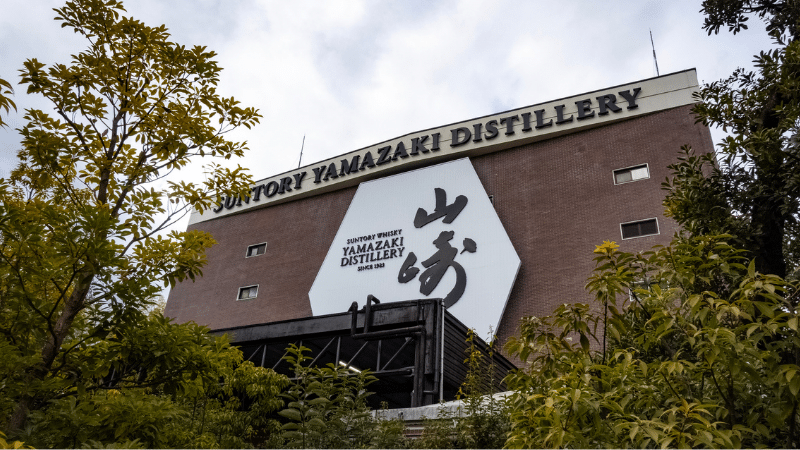
Whether it’s the legendary Yamazaki, tucked between Kyoto and Osaka where Japan’s whisky history began —
Or the coastal Yoichi Distillery in Hokkaido, inspired by the rugged spirit of Scottish Islay —
Or perhaps a new wave of craft distilleries rising from forgotten sake breweries and revitalized farmlands —
Every distillery is a window into a different Japan.
Through this blog series, we invite you to travel across the archipelago — not just to taste whisky, but to feel the spirit of each land where it’s born.
Let’s explore the stories that linger in the casks, the hands that shape the flavor, and the silence in which the whisky learns to speak.
Your glass is ready.
Let’s begin the journey.
🎬 The Story Behind|Yamazaki Distillery
Scene 1: The Visionary Spark
It begins in 1923. Shinjiro Torii, a visionary entrepreneur who had already found success with Akadama port wine, stood on a mist‑shrouded, verdant valley near Kyoto. He imagined something unprecedented—a Japanese whisky that would resonate with his people’s subtle palate. This belief led him to Yamazaki, nestled between Mt. Tennozan and Mt. Otokoyama, where the Katsura, Uji, and Kizu rivers converge in pure, soft-flowing clarity.
Scene 2: The Master Craftsman Arrives
Enter Masataka Taketsuru: born in 1894 to a Hiroshima sake‑brewing family, he journeyed to Glasgow in 1918 to learn the craft of Scotch whisky—apprenticing in distilleries like Longmorn and Hazelburn. In 1920, he returned to Japan with his Scottish wife Rita, bringing both technique and a fierce devotion to authenticity.
Scene 3: A Partnership Forged by Purpose
Torii hired Taketsuru in 1921 on an extraordinary salary—rumored to exceed that of the prime minister—tasked with building Japan’s first malt distillery. In November 1924, the copper stills came to life. By 1929, Yamazaki’s debut whisky, the robust “Shirofuda,” hit the market—though its smoky character initially baffled Japanese consumers.
Scene 4: Triumph and Transformation
Undeterred, Torii refocused, and in 1937 introduced Kakubin—“square bottle”—a lighter, blend refined for Japanese cuisine. It captured the nation’s favor and became emblematic of the Suntory style. Yamazaki was no longer just an experiment—it had become a cultural icon.
Scene 5: The Land Breathes its Spirit
Yamazaki’s soul emanates from its terroir. Mists swirl daily over the valley’s rivers, wrapping the warehouses in humidity and seasonal change—creating the ideal environment for slow, contemplative barrel aging . Here, the legendary water—praised since the days of Sen no Rikyu and even celebrated in the Man’yōshū anthology—imbues the whisky with silky purity.
Scene 6: Craftsmanship Meets Patience
Yamazaki is a symphony of varied stills, diverse fermentation vessels, and eclectic casks—American oak, sherry-seasoned barrels, and precious Mizunara oak. Each component is a note in a grand orchestration of flavor. The brand’s unyielding “Shokunin spirit” ensures that from mash to bottling, every batch reflects devotion distilled into liquid form .
Final Scene: Legacy in Every Sip
Today, Yamazaki stands as Japan’s oldest malt whisky distillery—where the legacy of Torii’s daring dream and Taketsuru’s craft continues to echo in each glass. When you breathe in the delicate smoke, sandalwood, or sunlit honey notes, you’re tasting the land, the mist, and the hands that shaped it—woven into a nearly century‑long cinematic journey.